| |
Gaddis
in Fiction |
| |
Chandler
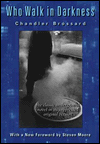
Brossard Gaddis knew Brossard in the late 1940s and was the basis for the character Harry Lees, a Harvard dandy who drinks too much. |
| |
Jack
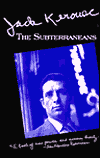
Kerouac After he returned from Europe in 1951, Gaddis became acquainted with all the Beats, and in 1953 made a trip to Alan Ansen’s house that is reported in Kerouac’s bluesy 1958 novel. Gaddis is called Harold Sand and he’s described as “a young novelist looking like Leslie Howard.” Ansen is “Austin Bromberg,” and in later years Gaddis said Kerouac’s account was very accurate. |
|
|
David
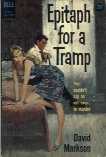
Markson Markson read The Recognitions
upon its publication in 1955, wrote Gaddis a fan letter which he responded
to six years later, and remained in contact with him until Gaddis’s
death in 1998. A character in Epitaph for a Tramp is writing
an essay on The Recognitions and Gaddis’s style is parodied
in a few places. |
 |
Joseph McElroy A Smuggler's Bible New York: Harcourt, Brace & World, 1966. The following passage (plus a reference to a long novel) --
echoes this one, about Otto, in The Recognitions:
[Richard Oswald] |
|
|
Richard
Horn The protagonist of this innovative novel in the form of an encyclopedia has The Recognitions on his bookshelf, and on page 48, under the entry ELEVEN WEST HUDSON ST., "a big, unshaven man told a small, untidy man, "I used to think The Recognitions was the best in English since Ulysses." . |
|
|
David
Markson The opening line of The Recognitions
is quoted in a chapter of the protagonist’s favorite opening lines. |
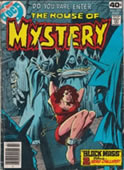 |
Wyatt Gwyon (pseudonym for Martin Pasko) In this horror story, the Reverend Edward Bast, a witch-hunter from Salem, visits the town of Gaddis, New Hampshire, where he “takes over the local church. When he goes after the Sexton’s daughter, he is struck down by the caretaker and falls into a mold where molten metal is being poured. The next day the church bell rings loudly, and upon closer inspection one can see the Reverend’s corpse seared to the bell” (https://dc.fandom.com/wiki/House_of_Mystery_Vol_1_270). The conclusion resembles the afterlife of Rev. Gwyon, who is accidentally baked into communion bread. Canadian author Pasko (1954-2020) allegedly used the pseudonym Wyatt Gwyon for several stories: see https://www.comics.org/creator_name/40452/sequences/. |
|
|
John
Sladek A science-fiction novel that names
J R and imitates its style of dialogue. |
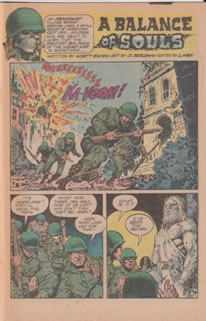 |
Wyatt Gwyon (pseudonym for Carter Scholz: see Radiance [2002] below) A World War II story about a small squad of American soldiers in an abandoned village behind enemy lines, initially inspired by Schramm’s war experiences as related by Jack Gibbs in J R, but then taking a supernatural turn. [Scott Bryan Wilson] |
| |
Alan
Ansen Ansen’s acquaintance with Gaddis is
the subject of a quatrain in this long poem (page 156). |
|
|
Stanley
Elkin Gaddis admired Elkin and made friends
with him in the 1970s. For some reason, he named the 8-year-old geriatric
in this novel Charles Mudd-Gaddis. |
|
|
Charles
Simmons Gaddis’s name comes up in this novel
about editors at the New York Times Book Review. |
|
|
David Markson Gaddis flits through the memory of protagonist Kate
a dozen times in this sublime novel. |
|
|
Sarah Gaddis A largely autobiographical account of Gaddis’s daughter’s
relationship to her father, here called Lad Thompkins. |
|
|
Don DeLillo Gaddis, a friend of DeLillo’s, may have contributed
to the character Bill Gray, a reclusive novelist. |
|
|
Rick Moody Gaddis is included in the list of authors Moody most
admires (pages 236-37). |
 |
David Markson Quotes a line from The Recognitions regarding
Sheri Martinelli (the basis for Esme). |
|
|
Ethan Mordden |
 |
Klaus Modick Weg war Weg Isensee Verlag Oldenburg, 1998 Klaus Modick, German novelist, poet and co-translator of JR and Carpenter’s Gothic has the following passage in his novel Gone Was Gone, making an allusion to the end of Carpenter’s Gothic:
("These days, of course, the very clever like William Gaddis
don’t even put the very last full stop, but rather signal the
basic impossibility of closure or the unfinished fragmentary tragedy
of their most sacred moments with a highly calculated and trickery space
instead of a punctuation mark at the end, and thus even turn Céline’s
famous three dots at the end of Journey to the End of the Night
into nothing but a poor compromise.") [AZ] |
|
|
John Updike Gaddis is mentioned a few times (pages 28, 71) in
the context of his membership with the American Academy and Institute
of Arts and Letters. |
 |
Kurt
Andersen
|
 |
William Gillespie, Frank Marquardt, Scott Rettberg,
Dirk Stratton The Unknown Hyperfiction, 1999 http://www.unknownhypertext.com A story following the imagined
adventures of three supposedly rich and famous collaborative writers
on a mock book tour all over the world. In the course of that they also
play pool with William Gaddis and he wins. "The Unknown" won
the first price in the 1998 "trAce/Alt-X Hypertext Competition."
In a chapter called "Remember to Read Gaddis" there is the
following observation about what is going on in Gaddis's novels: "Voices
do battle in a hyper-real space where orality, voices, statements and
documents of various kinds, represent the sum and total possible understanding
of experience. What is said by the characters is all that is known,
and what is said is open to misinterpretation, or misdirection."
[AZ] http://www.unknownhypertext.com/readgaddis.htm |
 |
Frederick Busch Don't Tell Anyone Norton, 2000 In the story "Domicile," the narrator makes a facetious reference to a seven-page Reader's Digest version of The Recognitions (p. 213). |
|
|
Joseph
Heller Gaddis mentioned on page 166 concerning his disappointment with his publishers. |
|
|
David
Markson This Is Not a Novel Counterpoint, April 2001. Two lines from The Recognitions are quoted and a statement on the cause of Gaddis's death. |
|
|
Kurt Wenzel The character Richard Whitehurst, '"the most underrated writer
in America," "an older novelist of literary achievement
and poor sales," who lives in the Hamptons, seems to be at least
partly based on Gaddis, while the cover art echoes Gaddis's headless
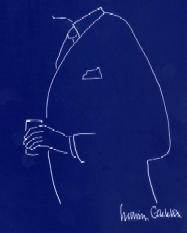
self-portrait with drink in hand at the top of this page. [DBV] |
|
|
Jonathan Franzen The Corrections Farrar, Straus & Giroux, September 2001. Not only does the title echo that of The Recognitions, but the best-read character in the novel uses the e-mail address exprof@gaddisfly.com (page 431). |
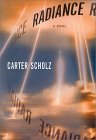 |
Carter
Scholz
Radiance. New York: Picador USA, 2002 At least a dozen lines from Gaddis's
novels appear in this novel about the nuclear-arms industry. Scholz,
who wrote the Salon obituary of Gaddis, re-creates Gaddis's
style with uncanny accuracy, down to Gaddis's characteristic punctuation.
Scholz's motive emerges from this exchange: "--steal a man's style,
about the lowest, and Highet turned to face the back of a scuffed brown
leather jacket lined with a red silk scarf nestled under curly blond
hair past which a stunning woman in a white silk blouse said, --Chazz,
I think he considers it homage" (127-28). |
 |
Gaddis is pretty obviously the model for the novelist Joshua Fels in the "Author" chapter of this autobiographical novel. If Dixon's account is to be trusted, Gaddis snubbed him on several occasions. |
 |
David Markson "If on a winter's night with no other source of warmth Author were to burn a Julian Schnabel, qualms?" (p.104) and "Tardily realizing---qualms after all. Author would undeniably be distressed at the loss of Schnabel's portrait of William Gaddis. (p.107) Also, "From Nightwood: Pray to the good God; she will keep you. From The Recognitions: Just ask God, baby, She'll protect you. (p.124) [JB] |
|
David Markson On p. 41 the narrator notes that The Recognitions was misspelled on WG's tombstone, and on p. 83 he quotes the line about "Willie" writing for "a very small audience" ( R 478). |
 |
Paul Auster |
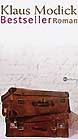 |
Klaus Modick Bestseller Frankfurt am Main: Eichborn, 2006 Klaus Modick's narrator Lukas Domcik, whom readers of Modick know from his 1998 novel Gone Was Gone (Gaddis mention see this page), returns as narrator in Bestseller. Again Gaddis is mentioned: "'Die gesamte Geschichte', sagte der ebenso kluge wie skeptische Paul Valéry, ist eine Fälschung, und folglich ist sie nutzlos. Ich bin der Verführung der Geschichte niemals erlegen' – über William Gaddis' monumentalem, einschlägigem Roman Die Fälschung der Welt wäre das ein hübsches Motto gewesen." (p. 95) ("'The whole of history', says the wise and skeptical Paul Valéry, `is a fake, and thus useless. I was never seduced by it' – this would have been a nice motto for William Gaddis's monumental [and in an excursion on fakes in literature relevant] novel The Recognitions. ") [AZ] |
 |
Drew Johnson William Gaddis appears as a character in this story, and its concerns mirror many of his, including the loss of parents early in life, the lives and methods of composers, and the isolation of expatriates. His appearance:
|
 |
Jeffrey Eugenides In the early portion of this novel, set at Brown University in 1982, two literature students discuss adjectives made from authors' names. The character who speaks first, Leonard Bankhead, seems to be modeled on David Foster Wallace: "Kafkaesque," Leonard said. "Pynchonesque! See, Pynchon's already an adjective. Gaddis. What would Gaddis be? Gaddisesque? Gaddisy?" |
 |
David Foster Wallace In the "Author's Foreword" --a metafiction placed 68 pages into the novel--the narrator writes of his early ambitions: "My specific dream was of becoming an immortally great fiction writer à la Gaddis or Anderson, Balzac or Perec, &c.” (p. 75). |
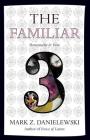 |
Mark Z. Danielewski A major character attends a college in California where one of her instructors is named Gaddis (p. 585). The author confirmed to Steven Moore that this was indeed a reference to WG. |
 |
Rodrigo Fresán |
 |
Vi Khi Nao |
 |
|
 |
Zachary Tanner The dates of Gaddis’s birth (p. 171) and the publication of The Recognitions (p. 176)are included in a chapter in the form of a chronology for one of the characters in this quasi-sci-fi mega-novel set in the 1950s. |
 |
Chris Bachelder and Jennifer Habel Near the end of this novel, the Melville-obsessed narrator tracks down new and fictional copies of Moby-Dick, and in the middle of p. 225 mentions Mr. Feddle signing a copy in The Recognitions at Esther’s Christmas Eve party (574). |
 |
Nick Black On three occasions, we’re told that the brilliant but criminal-minded protagonist of this erudite novel likes Gaddis's novels (pp. 221, 274, 414-15). |
 |
Arno Geiger "William Gaddis said in an interview: "And now that I’m getting older and running out of material...oh, I’m pretty tired of it all." [Anja Zeidler] |